General Dentistry: Check-ups and Fillings
In short
General dentistry covers check-ups, fillings for decayed teeth and cleaning off tartar. I do all three myself, as well as simple extractions. If decay is caught while it’s small, the tooth can usually be repaired with one filling in a single appointment.
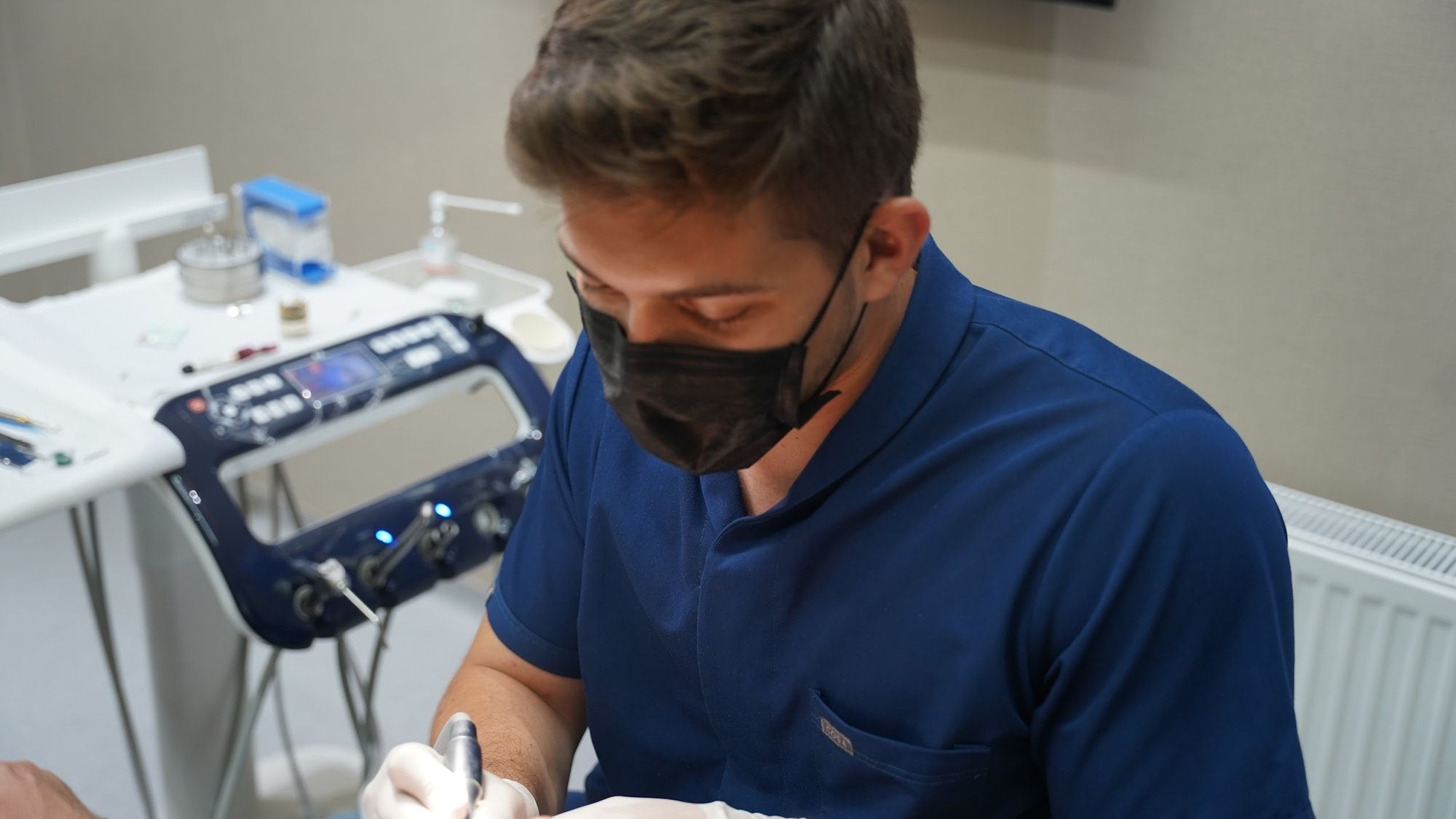
What happens at a check-up
I look at your teeth, your gums and the soft tissues inside your mouth. Decay between the teeth or under an old filling isn’t always visible, so if we need to see it, we take an X-ray.
Then I go through what I’ve found: which teeth are healthy, which we should keep an eye on and which need treatment. If something needs treating, I give you a written plan and we decide together what comes first.
How a filling is done
I use composite for fillings. Composite is a tooth-coloured filling material that is built up in the tooth in layers, with each layer set hard by a light.
- If needed, I numb the area around the tooth.
- I remove all the decay from the tooth.
- I build the composite up in layers and give the tooth back its shape.
- I check your bite, adjust the filling if it sits too high, and polish it.
You can see these steps in the photos from one of my filling cases on upper back teeth. From the outside the decay looked like small stains; once the teeth were opened, it went much deeper. The blue sheet in the photos is a rubber dam, a thin rubber sheet fitted around the teeth being treated. It keeps saliva off the tooth, so the composite bonds to a dry surface, and it stops water and small fragments from going down your throat.
When a filling isn’t enough
If decay has reached the nerve of the tooth, a filling alone won’t do; the tooth needs root canal treatment first. If most of the tooth has been lost to decay or a fracture, a filling can’t protect the thin walls that are left, and the tooth may break. A zirconia crown, which covers the whole tooth, protects it better. If a tooth can’t be saved, it has to come out. Impacted wisdom teeth are taken out by the specialist dentists at the clinic.
Does it hurt?
Small, shallow cavities often don’t need numbing. For deeper decay I put a numbing gel on the gum, then give the injection, and you shouldn’t feel pain during the filling. Afterwards the tooth can be sensitive to hot and cold for a few days; this usually settles on its own. If it doesn’t, or if it hurts when you bite, let me know. The filling may need adjusting.
What happens at a scale and polish?
Tartar is plaque that a toothbrush hasn’t removed and that has hardened over time. It builds up along the gum line and makes the gums red and prone to bleeding when you brush. At a scale and polish I take the tartar off with instruments and then polish the teeth. If your gums are inflamed, you may feel some stinging during the cleaning.
How long does a filling last?
How long a composite filling lasts depends on its size, where the tooth is in your mouth and whether you clench or grind your teeth. If you do clench or grind, I can have a night guard made for you to wear while you sleep. Large fillings break or wear sooner than small ones, and a back tooth with a very large filling may need a crown in later years. New decay can start at the edge of a filling, and I look for it at check-ups.
Frequently asked questions
Does a tooth that doesn’t hurt still need a filling?
Should I have my old metal (amalgam) fillings replaced?
When can I eat after a filling?
How often should I have a check-up?
I’m only in Istanbul for a short while. Can I have a filling done?
If you have a question, send me a message
You can attach photos of the teeth on WhatsApp. I read the messages myself.