Deep Molar Fillings Under Rubber Dam: A Step-by-Step Case
Presenting problem
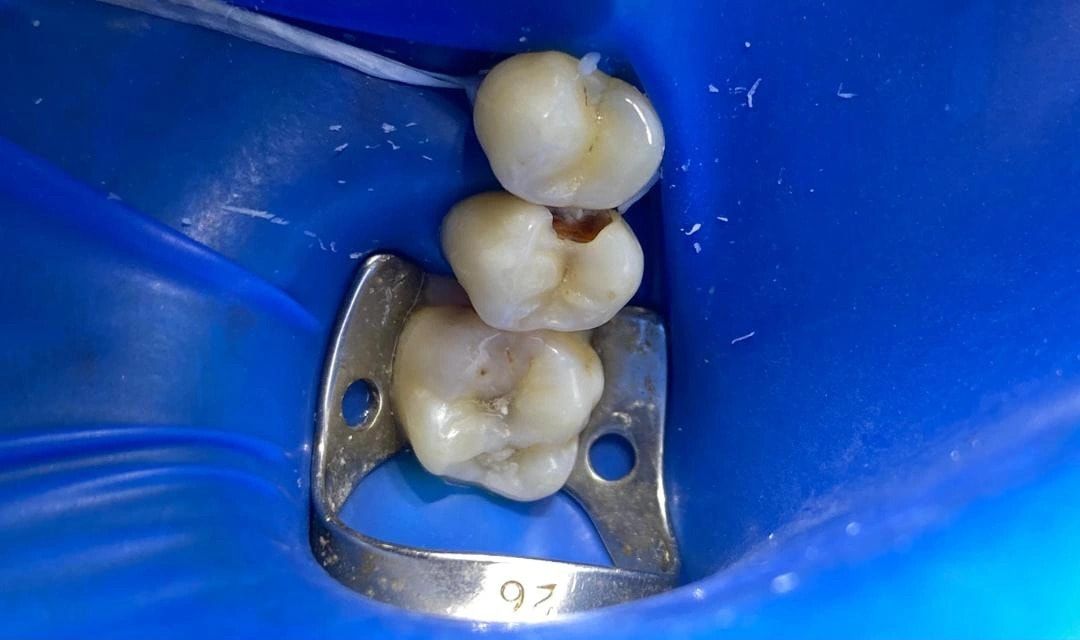
Upper molars with decay that had worked its way in through the grooves and the contact points between the teeth. From the outside the damage looked minor; once the teeth were opened, the cavities underneath were considerably deeper.
Treatment
The teeth were isolated with a rubber dam, all decay was removed, and each tooth was rebuilt in the same visit with layered composite resin, restoring the natural groove anatomy and the contact between the teeth.
Isolation
A rubber dam was placed so the teeth stayed dry and protected from saliva and bacteria for the whole procedure — the single biggest factor in how long an adhesive filling lasts.
Caries removal
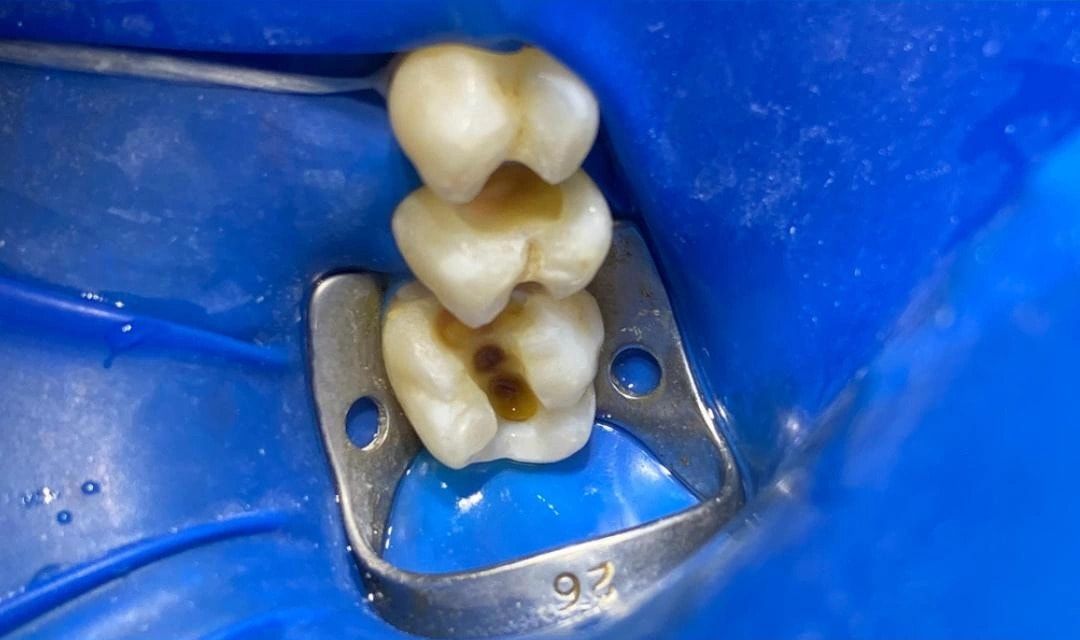
The decay was removed completely. The middle photo shows how much damage was hiding under what looked like small surface stains.
Layered composite
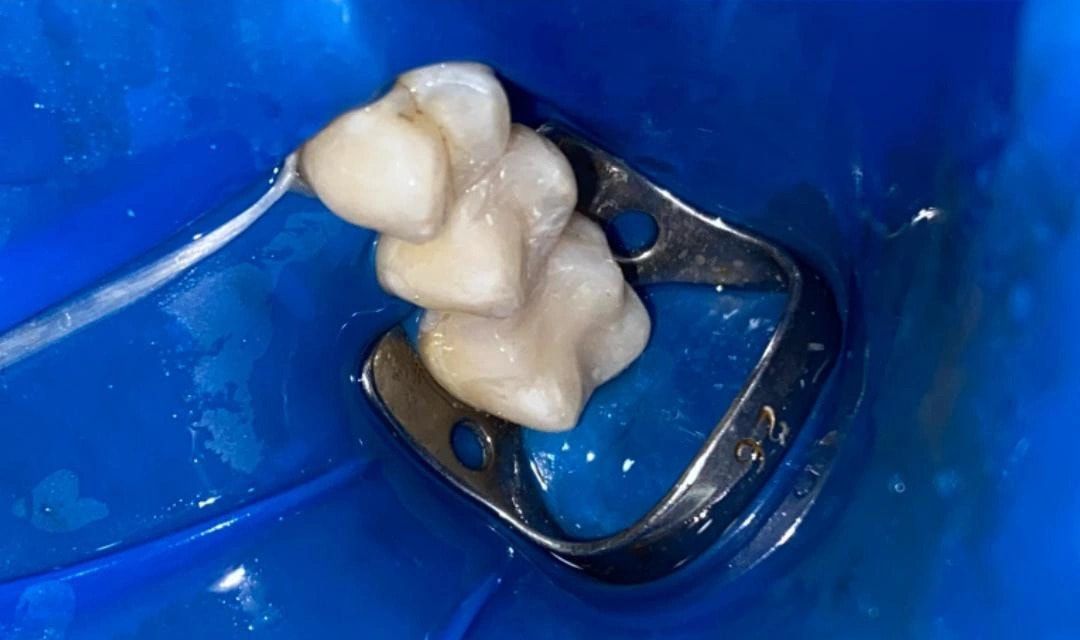
Each tooth was rebuilt layer by layer with composite resin, the chewing anatomy was carved back in, and the bite and contacts were checked and polished.
These photos are from a real patient treated by Dr. İşler, shared with the patient’s written consent. They show something patients rarely get to see: how much decay can hide under a tooth that looks almost fine on the outside, and what a careful composite restoration looks like step by step.
Why does the decay look so much bigger in the middle photo?
Decay usually starts in the narrow grooves of a molar or at the tight contact point between two teeth, then spreads sideways underneath the hard outer enamel. The entry hole stays small while the softer dentine underneath is hollowed out. That is exactly what happened here: the before photo shows only dark lines and shadows, while the middle photo — taken after the teeth were opened — shows the real cavities. It is also why “it doesn’t hurt yet” is not a reliable sign that a tooth is healthy.
What is the blue sheet in the photos?
That is a rubber dam: a thin protective sheet that isolates the teeth being treated from the rest of the mouth. It keeps the teeth completely dry and free of saliva while the filling is bonded. Composite fillings are glued to the tooth rather than packed into it, and that adhesive bond is much stronger and longer-lasting on a clean, dry surface. It also stops water spray and debris from going down your throat, so most patients actually find treatment more comfortable with it.
How were the teeth rebuilt?
After every trace of decay was removed, each tooth was restored with composite resin applied in thin layers, with each layer hardened with a curing light before the next. Building the filling in layers keeps shrinkage stresses low and lets the natural chewing anatomy — the cusps and grooves you can see in the after photo — be shaped back in, rather than leaving a flat patch. Finally the bite was checked and everything was polished smooth.
Could these teeth have needed a root canal instead?
If decay reaches the nerve, a filling alone is no longer enough. These teeth were treated in time: the decay was deep but the nerves stayed healthy, so each tooth kept its natural vitality. That window is the whole argument for regular check-ups — the difference between a one-visit filling and a root canal plus crown is usually just time.
What are the honest limits?
A composite filling is not immortal. Large fillings carry more load than small ones, and over the years a heavily rebuilt molar may eventually need an onlay or a crown. Deep fillings close to the nerve are also monitored at check-ups. With good brushing, flossing and regular check-ups, well-bonded composites routinely last many years — and your own case depends on your teeth, which is why we assess before we quote.