Replacing an Old Front Bridge: Before and After
What the patient came in with
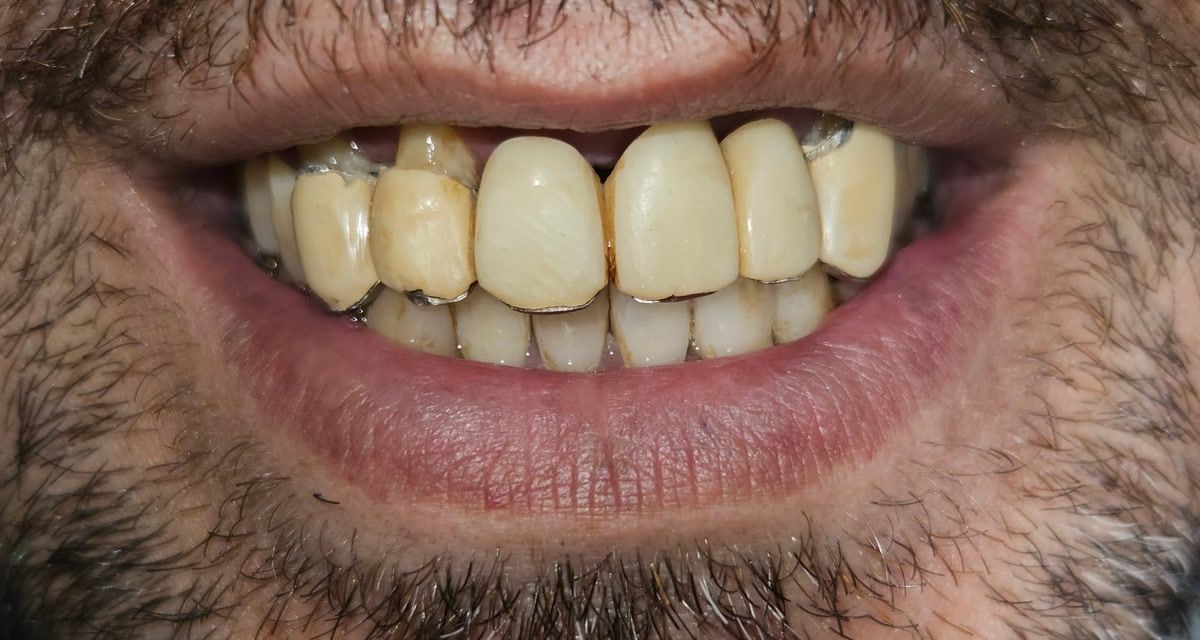
The old bridge on the upper front teeth had turned yellow, and grey metal showed along the edges of the teeth. Under the bridge, several upper front teeth were missing.
What was done
The old bridge was taken off, the teeth and gums around the gap were checked, and a new bridge was made for the upper front teeth.
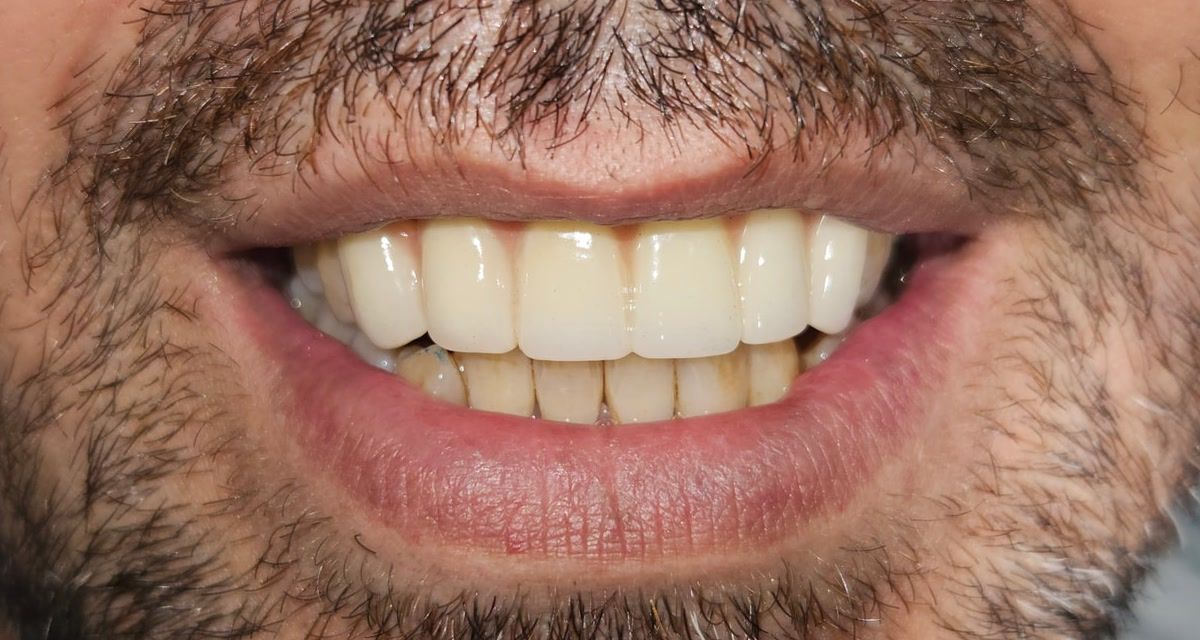
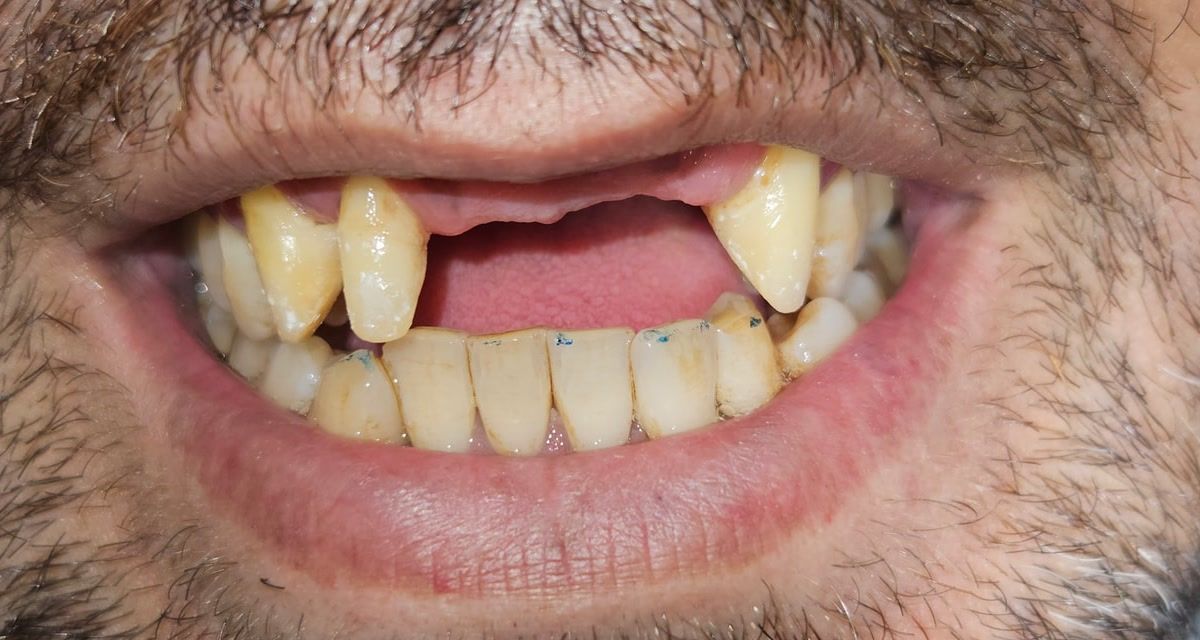
I replaced this patient’s old front bridge. The photos are shared with the patient’s written consent. At the top, the old bridge (before) sits next to the new one (after); the photo below them shows the same area with the old bridge removed.
The old bridge
In the before photo the bridge is still in place. Its teeth have yellowed, and grey metal shows along their biting edges.
With the bridge off
The photo below the before-and-after pair was taken with the old bridge removed. Several upper front teeth are missing, and the bridge had been filling that gap. The small blue marks on the lower teeth come from articulating paper, a thin coloured sheet the patient bites on so the dentist can see where the upper and lower teeth meet.
Before a new bridge is made, the teeth and gums around the gap are checked, and any decay, crack or gum problem is treated first. A bridge is made in a dental laboratory, so it takes at least two appointments, with time between them for the lab.
The new bridge
The after photo shows the new bridge in place. The front teeth are lighter, they are all the same shade, and no metal shows at the edges. The lower teeth are the patient’s own and look as they did before.
Does an old bridge with metal showing need replacing?
If the bridge is sound and the teeth around it are healthy, it can stay where it is, even with some metal showing. An examination, and an X-ray if needed, shows which applies.
How long a bridge lasts depends mostly on the teeth holding it. The bridge itself can’t decay, but decay can start where it meets those teeth. That is why the area under the false teeth needs cleaning every day with a floss threader or an interdental brush, and why the edges of the bridge are looked at for early decay at check-ups. If you clench or grind your teeth, a night guard protects the bridge while you sleep.